

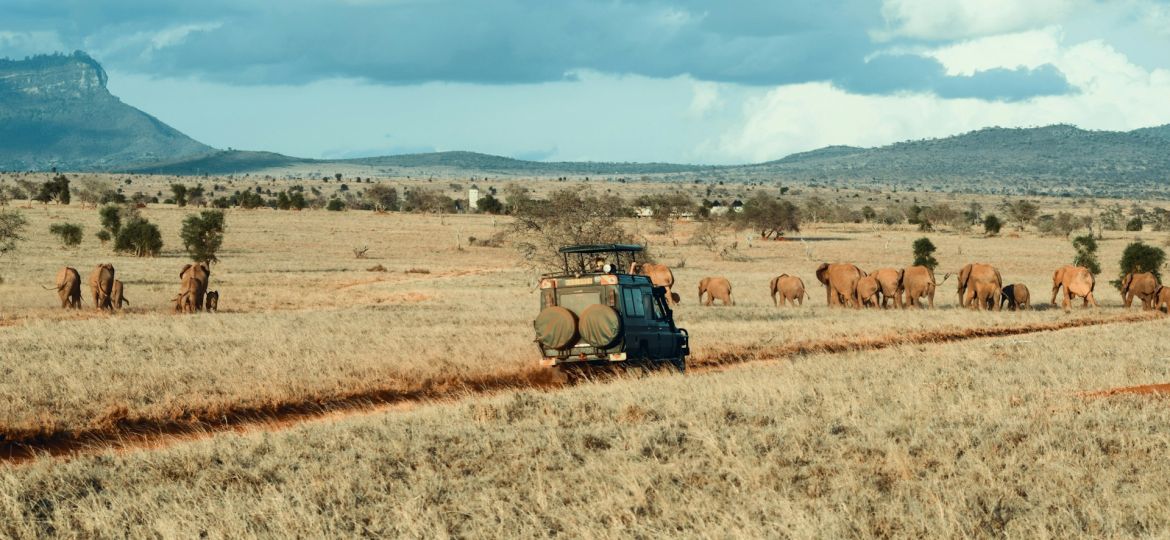
Everyone wants to see the Big 5. This is what 2026’s travel data says about who’s booking, where they’re going, and what they’re forgetting to pack.
While one part of the traveller world chases city getaways, the rest are planning a Kruger Park safari or some other African odyssey.
According to the Squaremouth 2026 Safari Travel Trends Data Report, the safari travel trends 2026 say that the safari has officially graduated from a fantasy to mainstream bucket-list royalty.
We’re not surprised, at the moment our safari clientele are telling us they are extremely busy, but having the statistics to back it up makes the popularity of a safari that little bit easier to see, and to plan our marketing strategies around.

The Safari is Still the Dream Holiday
Squaremouth surveyed travellers about luxury trips, and 52% said they’re interested in going on safari.
That makes it the second most popular bucket-list holiday, beaten only by luxury island getaways. (Fair enough, we get that. Sand and a cocktail are hard to argue with. But sand and a leopard sighting? That’s the stuff of dreams).
And the stats just get better:
- 65% of people who’ve already been on safari want to go again. This is ideal for safari companies, because if you can make that epic first impression, you can be sure that you’ll have return clients.
- 26% of travellers planning a luxury trip in the next two years say safari is their priority.
- Safari bookings are up 10% year on year, even with higher prices and plenty of global uncertainty.
Travellers are also putting their money where their binoculars are.
Over 40% of those surveyed are deliberately raising their travel budgets this year, and 23% are doing it to land a premium, once-in-a-lifetime experience.
It’s the Young Ones Driving Demand
You’d expect retirees with time and savings to be first in line for safari. The data says otherwise. Among people who’ve never been on safari:
Age group | Dream of going on safari | No interest |
18-34 | 54.2% | 37.3% |
35-54 | 52.4% | 32.3% |
55+ | 31.5% | 47.9% |
So more than half of travellers under 55 are daydreaming about game drives, while fewer than a third of the over-55s feel the same.
Squaremouth suggests older travellers often prefer holidays closer to home, which may explain the gap.
Millennials and Gen Z, meanwhile, are swapping weekend city breaks for sunrise sundowners and bush breakfasts.
Where Is Everyone Going?
Based on Squaremouth’s booking data for the first half of 2026, here’s where safari travellers are heading:
- South Africa: 36.5%
- Tanzania: 21.4%
- Kenya: 20.9%
- Botswana: 6.8%
- Uganda: 3.4%
- Rwanda: 3.1%
- Namibia: 2.8%
- Zimbabwe: 2.7%
- Zambia: 2.3%
South Africa takes the crown as the most popular safari destination, and it’s also the most affordable on the list.
Botswana, by contrast, is the priciest but still makes it into the top 5.
The report puts the average safari at over $25 000 per trip for American travellers, and notes that 8 of the 15 most expensive countries to visit in 2026 are safari destinations.
So if you want big cats, elephants, and a very photogenic sunset without the eye-watering price tag, there’s a reason travellers keep choosing the south.
The Not-So-Fun Bit (But Stay with Us)
Squaremouth found that 82% of safari bookings lacked Cancel for Any Reason (CFAR) or Interruption for Any Reason (IFAR) cover.
That’s a lot of very expensive trips resting on a lot of optimism.
Why is it a big deal? According to the report:
- Standard travel insurance generally won’t cover you if an advisory level is raised after you’ve booked, because that’s considered a foreseen event.
- Some popular safari countries have regions with higher advisory levels, even when the country overall sits lower. Rwanda is one example, has high risk advisories because it is near the DRC border, close to where the highly sought-after gorilla trekking holidays happen.
- Advisory levels can change over night, so waiting to buy cover is a gamble.
Your Pre-Safari Checklist
Squaremouth has a few recommendations, if you are one of the lucky ones planning a safari:
- Book your insurance early. Do it before advisory levels have a chance to shift.
- Check your whole itinerary. One country can have several advisory levels, so look at the specific regions you’ll visit.
- Consider CFAR and IFAR add-ons. Standard cover may not be enough in some regions, and these upgrades are only available within roughly 14 to 21 days of your first trip deposit.
- Check your evacuation limits. Safaris happen in remote places, so make sure your medical evacuation cover is high enough to get you out of them.
Also keep an eye on official government travel advisories before you book and again before you fly. Conditions can change.
Running a Safari Company, Lodge or Travel Agency? Read This Bit
Strong demand is wonderful, but it only pays off if travellers can actually find you.
Safari dreamers search, compare and plan online long before they ever send an enquiry, so the brands that show up first are the ones that get the booking.
That’s where we can help.
Bushwillow Media is a human-first safari marketing agency, and we help travel brands become the obvious answer when those safari-curious travellers start searching. This is what we do best:
- SEO and GEO: search strategies that get you ranking on Google and showing up in AI-powered search, so you can sell tours directly and cut out the middleman.
- Blogs, guides and itineraries: in-depth, story-rich content that positions you as the go-to name. Written by real people, with no AI slop.
- Website design and copy: sleek, SEO-friendly sites with words that sound like you.
- Social media: accounts that are as colourful and informative as the bush at sunrise.
- Consulting: a sounding board for the tough marketing decisions.
We’re a small team with more than 10 years of copywriting and SEO experience, working with lodges, hotels, travel agencies and safari companies across Southern Africa and beyond.
Want more direct bookings? Explore our tourism marketing services, send us a WhatsApp message, or email hello@bushwillowmedia.co.za.
Source: Benna, S. (2026). Safari Travel Trends: 2026 Data Report. Squaremouth. Last updated July 23, 2026. https://www.squaremouth.com/travel-advice/safari-travel-trends-report